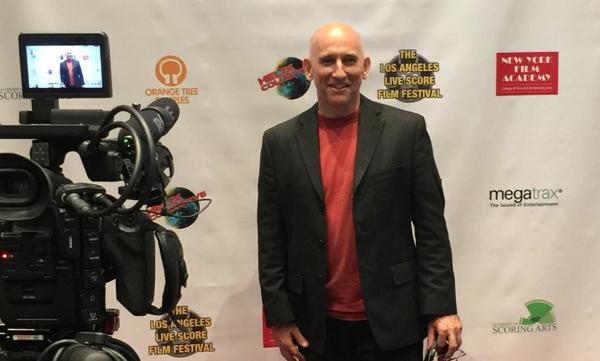
On the licensing side of the business,
I’ve been finishing off composing, mixing and mastering tracks for Season 3 of the A&E Emmy Award-Winning TV Series “Born This Way.”
And, last, but certainly not least, on the production side of the business, I’ve been not only getting my own tracks licensed, but I’m seeing more and more students getting their music licensed.
Being an avid researcher, I discovered two main common denominators among those people who are getting their tracks licensed on a consistent basis:
1. They smartly utilize the resources included in the 180 Day Music Licensing Challenge.
2. They consistently produce quality tracks by learning the Art & Science of A/B’ing.
The Art & Science of A/B’ing
During a recent recording session, I spoke with the production team of the Grammy Award-Winning Artist
Chance The Rapper. I’m continually struck by the fact that people who consistently create great recordings tend to share the same story. It’s a story of how they stripped away complexities and narrowed down their craft and created success with basic important priorities. Priorities such as: working through adversity on a daily basis. Never giving up. Always learning more about their craft. Building and maintaining strong business relationships.
And in the case of music production, they never “fly blind” (arranging, editing, mixing, and mastering without comparing their work to similar commercially released reference tracks – called A/B’ing [comparing “A” to “B.”])
This point is so important, I’ve seen brand new students with no licensing experience, license their
music by concentrating and focusing on this one technique alone.
When you mentor students for 30 years, you start to see patterns. Well, this one is unmistakable.
The Art of A/B’ing
The first step of A/B’ing seems like the easiest step. It’s
not.
The first step of A/B’ing effectively is to choose appropriate tracks to use for reference tracks. That’s plural. Not just one. I find that three tracks is a good number.
Before we get into further steps, you’ll see (and you may already know this if you’ve worked with me before or taken any of my
courses) that I approach teaching and mentoring with the philosophy of a) removing unworkable approaches to production and b) building confidence. If anything is unworkable (and there are a number of tutorials and approaches out there which are not workable) the result is lowered confidence for the end-user. The one thing that makes me happiest is seeing students license their music consistently.
That being said, an incredible confidence builder for you as a producer/engineer, is this deceivingly simple approach:
1. Choose three reference tracks that you really like the production of, similar to your project, in arrangement, tempo, style, feel and mood. Easy, right? No. It takes patience, time, and research to do this effectively. And for many, this step is
skipped altogether. I can predict right away, in the case where this step is skipped, that the quality of the project will not be as good as it could have been if this step were carried out. Make sure the reference tracks you import into your project are high quality files. I purchase my tracks from iTunes (AAC files) and convert them in iTunes to wav files before importing them into my project.
2. This second step is part of the secret sauce that I’ve discovered. It produces amazing results and a huge confidence boost for anyone who does it. I’ve found that anything you do to increase the confidence of a producer/engineer, will absolutely increase the ability of that person to objectively listen to their own mixes accurately, and help them make choices in their mix without fear or anxiety or “second guessing.” Here’s the step: The first thing you
are going to A/B, is not your track to these commercial recordings. The first thing you are going to A/B is these commercial recordings to each other. Once you actually do this, you will be blown away. You will hear things in these recordings you never heard before - recordings that you thought were “perfect,” that you thought were created by “untouchable gods that you will never become.” I encourage you to take notes while carrying out this step. Again, you will be blown
away by some fascinating phenomenon that occurs here. You may find that one track has too much bass for your taste, though the rest of the mix you love. You may find that one track is overall a lot brighter than the other two. You may find that one track sounds thinner in the mid-range than the other two, etc. Things you never heard before. All of these things you’ve never heard before will help you arrive at one important conclusion: Mixing and Mastering is not just a Science. It’s an
Art. These commercially released productions are produced by humans, just like you, who have strengths, weaknesses, preferences, and limitations. I’ve watched students go through this process many times. Every time, a similar thing comes out of their mouth. “Wow, I heard things in these tracks I’ve never noticed before.” And then the most important statement follows: “I can do this. I know exactly what I want my track to sound like now.”
Common definition of A/B’ing: Most people think A/B’ing is something you do at the end of a project. You emotionally prepare yourself to hear how bad your track sounds compared to the “perfect” commercial recordings created by “gods that you’ll never become.” It’s a confidence killer!
When you learn the
secrets of A/B’ing and how to do it effectively, you and your mixes will never be the same!
In later blogs and a video this coming week, I will fill you in on more of the science and details of how to A/B while mixing and mastering. But if you miss the importance of these first two steps, the quality of your productions will suffer to that degree. In fact, if you do the first two steps
above on your next project, watch the quality of your next mix improve markedly. (For an extensive education on A/B’ing, I suggest the course “Music Production FundaMENTALs” – which is one of three bonus courses on music production in the 180 Day Music Licensing Challenge).
To see excerpts of films and commercials of students who have licensed their music by doing the 180 Day Music
Licensing Challenge and for more information about how you can receive a critique of your music production, as well as a half hour consultation with me via Skype (where we can go over details of your mixing in your DAW via screen share), go to http://www.180daymusiclicensingchallenge.com
Good luck!
Gary Gray