One of the most frustrating experiences in sync licensing is sending music to a library and hearing nothing back. Artists often assume the music wasn’t good enough, but that usually isn’t the real issue. In many cases, the submission never had a real chance because the pitch itself didn’t align with how music libraries actually operate.
Music libraries receive a steady stream of submissions every week. Some are from talented artists, some are from beginners, and many arrive without any understanding of what the company actually needs. When a pitch doesn’t immediately signal professionalism, relevance, and clarity, it’s very easy for it to get overlooked.
If you want your music to be taken seriously, you need to approach pitching the way professionals in the
industry do.
Research the library before sending anything
One of the biggest mistakes artists make is sending the same email to dozens of libraries without learning anything about them first. Libraries specialize in different styles of music, serve different markets, and operate under different licensing models. If your pitch doesn’t show that you understand what the company does, it’s much
harder for them to take you seriously.
Take the time to listen to the music already in their catalog. Look at the types of placements they’re getting. Some libraries focus heavily on reality television, while others concentrate on advertising, trailers, or film and drama. A track that works well for one library may not fit another at all.
When your submission clearly reflects
that you understand the type of music a library represents, it immediately separates you from the majority of generic pitches they receive.
Keep your email short and professional
Another common mistake is writing emails that are far too long. Music library executives don’t have time to read long stories about your musical journey. They simply want to know who you are, what kind of music you
create, and where they can hear it.
A short message that introduces you, briefly describes your music, and provides a streaming link is usually far more effective than a long explanation. The goal is to make it easy for the recipient to click and listen.
Professionalism matters here. A clear subject line, concise message, and well organized links signal that you understand
how the industry works.
Send your strongest and most relevant tracks
Artists sometimes send ten or fifteen songs in their first email. That approach can overwhelm the listener and reduce the chances that any individual track gets proper attention.
In most cases it’s better to send a small number of carefully chosen tracks that
represent your strongest work and match the style of the library. Three excellent tracks that fit their catalog will go much further than a large collection of unrelated material.
Think about the music from the perspective of the supervisor or library owner. They’re asking one question when they press play. Can this track work in a real scene.
Make sure your music is
truly sync ready
Even strong songs can struggle in sync if they aren’t produced with licensing in mind. Tracks that are cluttered, overly dynamic, or difficult to edit can be harder for editors to use.
Music that performs well in sync usually leaves space for dialogue and has clear structural sections that can be edited easily. You can hear this principle in songs like “Home” by Edward Sharpe and the
Magnetic Zeros, which has appeared multiple times in film, television, and commercials. The arrangement is simple, emotionally clear, and easy to place against visuals.
Similarly, tracks like “Intro” by The xx became popular for television promos and trailers because the atmosphere is strong but the arrangement remains controlled and flexible. Editors can shape the music without destroying the emotional arc.
When your music is structured with these practical considerations in mind, it becomes far more appealing to libraries.
Follow up the right way
A follow up email can be helpful, but it should be respectful and spaced out. Libraries are busy, and many submissions take time to review. If you do follow up, keep it short and professional.
Sometimes the timing simply isn’t right for a particular project. That doesn’t mean the door is closed. Many relationships in sync develop slowly as libraries begin to recognize an artist’s work over time.
Consistency matters more than one perfect email.
The real challenge is finding the right libraries to pitch
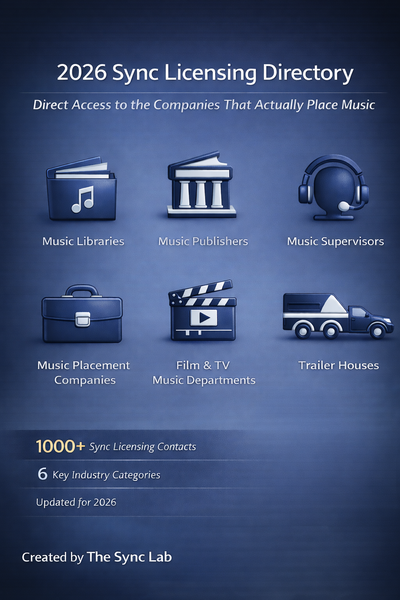
For many artists, the hardest part of the process isn’t writing the music or crafting the email. It’s finding legitimate music libraries that are actually worth pitching in the first place. There are thousands of companies operating in the sync space, and researching them individually can take weeks or even months.